Wednesday, December 15, 2010

The Evolution of Cell Phone


Cell Phone Reunion


New Nokia phones for 2008 -2010


Pop corn with cell phones


Samsung i9000 Galaxy S - first look at CTIA 2010


Torque DQ500

Torque DQ500
The Torque DQ500

We're definitely no strangers to cheap mobile phones that look like some of their more expensive relatives. Take the Torque DQ500, for example. One look and you'll instantly see that it has an uncanny resemblance to the E63s and E71s out there. But is this all it can offer? Or is there more to the DQ500 besides its looks and cheap price tag?

torque_dq500_nokia_e63.jpg

Side by side with the Nokia E63

Torque_dq500_is_thinner.jpg
The DQ500 is a bit thinner

Looks and size

Notice that it looks very similar to the Nokia E63 and E71. It sports a full QWERTY keypad, and its battery cover and boundaries are made of metal, giving it a glossy, metallic look and a robust feel at the same time.
We compared the DQ500 to the E63, and surprisingly, the E63 is thicker and also wider, although it's lighter by a few grams. Overall, the DQ500 is very easy to handle and looks good, too, which is a must if it is to fool anyone that it's something more expensive than its price tag of less than P4,500.

torque_dq500_brighter_homescreen.jpg
The DQ500 has a brighter display

torque_dq500_brighter_menu.jpg
Their menu icons are quite similar

Display  
 
The DQ500 features a large 2.2-inch, 65K color LCD display at 220x176 pixels. It's also quite bright, brighter compared to the E63's LCD display. The menu's icons and overall look is also similar to the E63's and E71's, showing that the DQ500 does not only look similar to these more expensive handsets on the outside but on the "inside" as well.   

Messaging and dual-SIM capabilities

The DQ500, just like other handsets from Torque, has dual-SIM capabilities which enable users to use two SIMs at the same time. It's easy to get used to this, as its interface and call and messaging options offer easy navigation to its dual-SIM options. For example, two call keys are already present above its QWERTY keypad, where you can make calls instantly using either of the SIM cards inserted. Also, the phonebook allows for sending SMS and MMS or storing contacts on any of the SIM cards.

As for messaging, the DQ500 gives users the option to use any one of the SIM cards inserted. Navigationg and changing settings are straightforward. However, we did have problems using the QWERTY keypad. Certain keys (like the letter A) are hard to press. This makes texting frustrating. We're not sure if this problem is only limited to the unit we received, which is brand-new, but if this affects all DQ500 units, then Torque may want to rethink making another QWERTY phone again.

Multimedia and connectivity

The DQ500 is well-endowed in terms of multimedia capabilities. For starters, it has a 1.3-megapixel camera, hardly a wow factor but a lot better than the VGA cameras other cheap mobiles have. Megapixels aside, you'd be surprised that its camera also features options like Effects (sepia, grayscale, etc.), White Balance, Timer, and Scene Modes. It also has an MP3 player and a video player that supports MP4s and 3GPs. Heck, it even has an FM radio. But as expected, the DQ500 lacks a 3.5mm audio jack, and its built-in speakers are decent at best. Still, we say it's quite stocked multimedia-wise.

In terms of connectivity, the DQ500 doesn't have Wi-Fi capabilities (absolutely no surprises here) because if it did, it would push its price tag above China-phone range. Still, this doesn't mean that it lacks connectivity options. It has WAP 2.0, a micro-USB port as well as the mobile-phone staple Bluetooth 2.0.

Battery life and memory

Not possessing many of the features of other phones from more established brands, we expected that the DQ500 will not be that power-hungry. However, we're still a bit surprised that it went almost three full days of extensive use on a single charge. And oh, another plus factor is that it can also be charged via USB.
The DQ500 has built-in memory for storing 1,000 names and a micro SD slot for more memory (maximum 2GB). 

Verdict 

It may be dirt-cheap, but that doesn't mean the DQ500 doesn't have much to offer. Yeah, understandably, it lacks many of the sought-after features handsets in higher price ranges possess, but it still has, for its price, many features, making it a rather "gifted" phone in its price range. It also has the looks to boot, giving others the impression that it's not something below P4,500. So if you're someone who doesn't really need many fancy features in a phone and is looking for a cheap, reliable, and good-looking handset with multimedia features, the Torque DQ500 is definitely a good buy.

Cell phone radiation

Here are some tips on the use of cell phones to minimize health risks:

• Radiation is energy that is transmitted in the form of rays, waves, or particles. The human body is exposed to various types of radiation which may be harmful or not to our body. The radiation emitted by cell phones is known as electromagnetic radiation. Our human body is exposed to radiation while making or receiving calls.

• We must always remember that so long as the cell phone is turned on, the cell phone gives off radiation even if the cell phone is not actually being used. Yes, as long as our cell phone is on, it emits radiation intermittently.

• Research suggests that wearing a cell phone on one’s hip may weaken one’s bone in the area of one’s pelvis.

• Researches show that men who carry their cell phones attached to their belts for an average of 15 hours a day, for about 6 years will find that their bone mineral density to be lower on the side of the pelvis where the mobile phones are being carried. Or worse, the fertility of the men who carry their cell phones on their belts in close proximity of their reproductive organs are affected. More particularly, affecting the quality and mobility of their sperm and/or their sperm count.

• Research shows that other sensitive organs of the body including the liver, kidneys, colon, and bladder are also affected by cell phone radiation.

• Since children are far more vulnerable to cell phone radiation than adults, children should never use cell phones or any wireless device of any kind. If this is not possible, at least limit the usage of cell phones by children. Children have thinner skull bones than adults thus children are more susceptible to greater penetration of radiation. Considering too, that the immune systems of children are not also as well developed as adults.

• Cell phones should be turned off more often. Reserving the use of cell phones for emergencies or important matters.

• As much as possible, we should use land lines at home and at work rather than use our cell phones to minimize our exposure to cell phone radiation.

• Studies show that using a cell phone for 10 years or more approximately doubles the risk of being diagnosed with a brain tumor on the same side of the head where the cell phone is typically held.

• Many do not know that when one is in the rural area or in an elevator or a car, where the cell phone uses more power, the brain will get a greater exposure from the higher power required in these instances.

• People can increase their resistance to cell phone radiation damage by taking increased dosage of antioxidants, melatonin, Vitamins B, C, E, and folic acid as these are natural oxidative stress fighters.

No doubt about it - the cell phone is a fabulous invention. In today’s lifestyle, we can no longer do without cell phones. But knowing that excessive use of the cell phones is dangerous and in fact could kill far more people than smoking or asbestos because of radiation, we should limit our use of them wherever possible. We should take prudent and simple precautionary measures in the use of cell phones in a way that is most compatible with preserving our health.

More Android cell phones in the Philippines

It’s been a while since I’ve made an updated list of the available Android mobile phones in the Philippines. I recently had a look at the mobile phone shops to find out what new Android mobile phones are now available locally. It looks like some more Android phones have already started to find its way in cell phone shops.

The newest Android mobile phones in the Philippines now sport higher resolutions and faster processors than the ones I have seen previously. The Sony Ericcson Xperia X10, HTC Desire and Samsung Galaxy S are three new Android phones you can find in the Philippines.

The Samsung Galaxy S is the latest Android mobile phone to arrive in the Philippines. I think it is currently available only from Globe Telecoms. It has a 4.0 inch Super AMOLED capacitive touch screen display with a resolution of 480 x 800 pixels. Samsung uses its own ARM Cortex A8 1GHz processor on the Galaxy S. 

The other specifications include HSPA speed, Wi-fi, bluetooth, a 5-megapixel autofocus camera, a secondary VGA camera, GPS, accelerometer, proximity sensor, an FM radio. It has 512MB of RAM, 2GB of ROM and either an 8GB or 16GB internal storage plus it supports an additional 32GB of external storage via a microSD slot. The Samsung Galaxy S is about 32,000+ pesos as a prepaid kit from Globe Telecoms.

The Sony Ericsson Xperia X10 is one such Android phone. The Xperia X10 has a 4.0 inch TFT capacitive touch screen display with a resolution of 480 x 854 pixels. It uses the speedier 1Ghz Snapdragon processor. It also has the features you’d expect from a modern connected phone like HSPA speed, Wi-fi, bluetooth, a 8-megapixel camera, LED flash, GPS, accelerometer and proximity sensor. It has a 1GB internal storage and 384MB of RAM. It supports 32GB of external storage via a microSD slot. The Xperia X10 is the most expensive of the three Android phones which is about 35,000+ pesos.


The HTC Desire is an Android phone similar in specifications and design to the Google branded Nexus One. It has a 3.7 inch AMOLED capacitive touch screen display with a resolution of 480 x 800 pixels. It uses the 1Ghz Snapdragon processor. The other specifications include HSPA speed, Wi-fi, bluetooth, a 5-megapixel camera, LED flash, GPS, accelerometer, proximity sensor, optical trackpad and an FM radio. It has 512MB of RAM. It supports 32GB of external storage via a microSD slot. The HTC Desire is about 32,000+ pesos.


That brings to about 7 Android mobile phones that are officially sold locally in the Philippines and it is probably just the start. For instance, Motorola still hasn’t officially announce local availability of its Android mobile phones. Also interesting to see is whether other brands will start to appear in the local market. I’m already seeing a lot of interest in Android mobile phones in the Philippines not only from ordinary users but also from local mobile developers.

Triple SIM Cherry Mobile Trident

I'm not sure why you will really need three SIM cards for a phone, but if you want to run three different networks in one phone all at the time, then the Cherry Mobile Trident is the phone that you are looking for.

The Cherry Mobile Trident looks like a
Blackberry Bold 9700, sporting an optical trackpad too, but it was designed to be more like a Nokia E72 and BlackBerry Curve mix.


In case you cannot read the features/specs in the picture, the Cherry Mobile Trident uses Quad Band GSM, 2.46” TFT LCD display, microSD support of up to 4GB, FM Radio and Analog TV both having recording capability, a 2MP camera, WiFi and Bluetooth support. Though the three SIMs are active at the same time, only two slots supports MMS and GPRS. What's interesting to know is the battery life of the phone since it is pinging three networks at the same time.

Get the Cherry Mobile Trident at any Cherry Mobile distributor for Php 6,490.

Tuesday, November 23, 2010

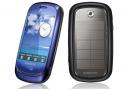
Samsung Powered Cellphone

[samsung_crest_solar_01.jpg]
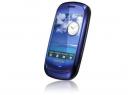
Technology is getting greener nowadays. Most manufacturers of electronic gadgets are now looking for more ways to make these devices environment friendly. Take for example Samsung's solar powered cellphone, the Crest Solar, which was unveiled recently. There were talks before of solar-powered mobile phones and now at last the Crest Solar is commercially available for those who prefer environment friendly mobile phone.


Samsung's Crest Solar is not powered by solar cells alone, obviously backup power is still needed for the phone to work continuously. The solar panels at the back of the phone can provide a talk time of 5 to 10 minutes after an hour's solar exposure. The phone might be good enough for those who are not using the mobile as a talking device but perhaps for those who prefer SMS since the power required for SMS is really compared to talking. Obviously this is not a smartphone but it do have the regular features of a mobile phone plus the solar panels at the back.

Credits to: JCO
http://www.pinoytechnologynews.com/2009/06/solar-powered-cellphone.html